For global logistics managers, supply chain directors, and fleet procurement officers, selecting the correct commercial fleet architecture is a critical decision that directly influences corporate ROI and operational efficiency. A common point of confusion during international procurement is understanding precisely: what is a tractor truck, and how does it fundamentally differ from a standard rigid truck? Choosing the wrong heavy-duty configuration can lead to compliance issues, restricted payload limits, and inflated operational costs.
Comprehensive Definition: Understanding the Core Concept of a Tractor Truck
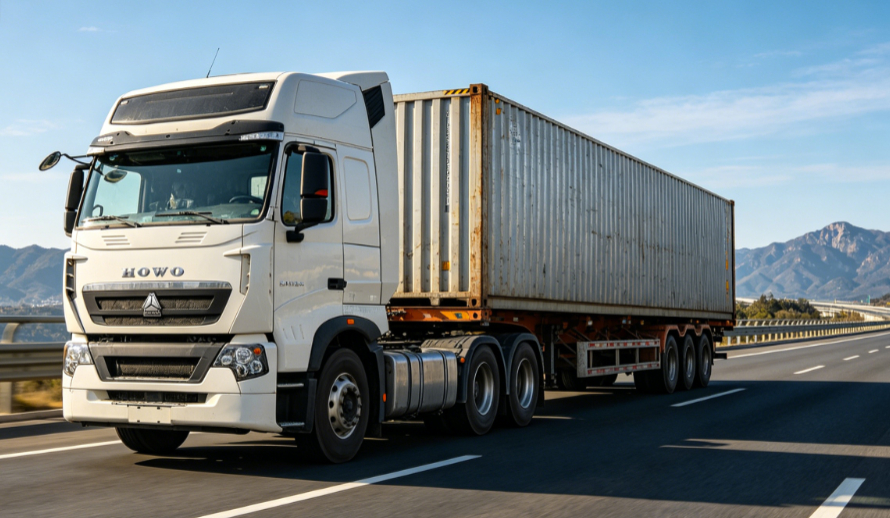
A tractor truck—often referred to as a semi-tractor, highway tractor, or prime mover.Unlike straight commercial vehicles, a tractor truck does not carry cargo directly within its own structure. Instead, it is equipped with a heavy-duty coupling mechanism known as a fifth wheel. This system allows it to pivot, support, and pull a wide variety of trailing equipment, ranging from flatbeds to specialized tippers.
What is a Rigid Truck (Straight Truck)?
In contrast, a rigid truck (frequently termed a straight truck) features a single, unified chassis frame that extends from the front bumper to the rear taillights. The driver’s cabin, engine, and cargo-carrying structure (such as a dump box, concrete mixer, or dry van) are permanently mounted onto this single piece of steel. It lacks a fifth-wheel coupling system, meaning the cargo box and the power unit cannot be separated during routine operations.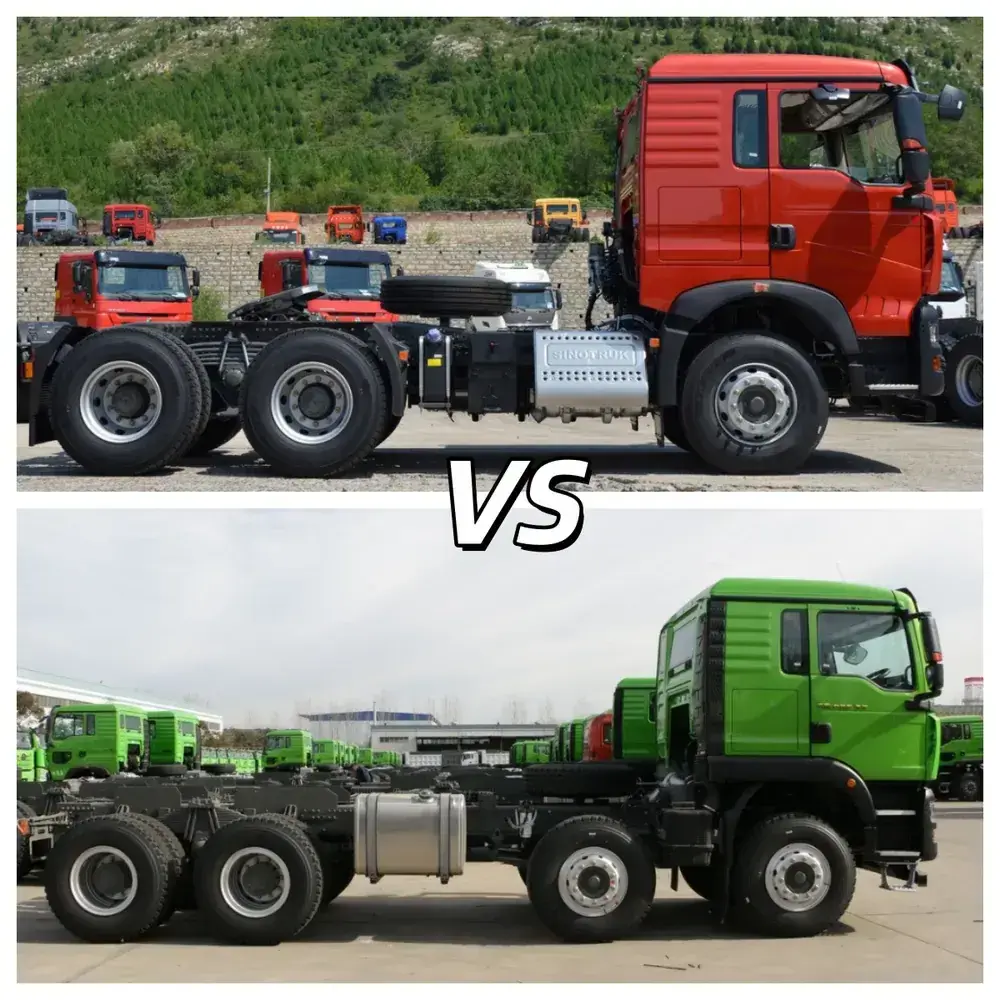
Differences: Rigid Trucks vs. Semi-Tractors Explained
To optimize your fleet allocation strategy and ensure long-term transport viability, fleet managers must evaluate three technical operational metrics:
Structural Mobility and Coupling Systems:
The most significant engineering divergence lies in articulation. A semi-tractor truck relies on the fifth-wheel connection, meaning the vehicle bends at the coupling point. This articulation grants a heavy-duty tractor truck a significantly shorter turning radius compared to a rigid truck of equivalent total length, making it highly maneuverable in tight port terminals and urban logistics hubs. Conversely, a rigid truck remains completely straight, which can limit maneuverability if the wheelbase is excessively long.
Maximum Payload Capacity and Axle Configurations:
When it comes to gross vehicle weight ratings (GVWR) and payload limits, semi-tractors are engineered for macro-logistics. By spreading cargo weight across multiple axles distributed between the tractor truck and the semi-trailer (such as tri-axle configurations), these vehicles can legally haul up to 40 to 60 tons depending on local road regulations. Rigid trucks, typically configured as 4x2、6x4or8x4 setups, generally max out at lower load capacities to comply with axle-load limits.
Fleet Operational Flexibility and Total Cost of Ownership (TCO):
Operational uptime is where the tractor unit shines. If a trailer is being loaded or unloaded at a warehouse, the tractor truck can uncouple from it, attach to a different pre-loaded trailer, and immediately head back out onto the highway. This "drop-and-hook" methodology eliminates driver downtime. A rigid truck, however, must sit idle during the entire loading and unloading process, reducing daily resource utilization.
Industrial Applications and Scenario Matching
Choosing between these two heavy-duty asset classes depends on your primary application field, route distances, and infrastructure conditions:
Long-Haul Freight & Cross-Border Logistics : The tractor truck is the undisputed champion here. Its ability to pull high-volume dry vans, reefers, and container chassis across thousands of kilometers provides unmatched cost-per-ton efficiency.
Heavy Mining & Infrastructure Hauling : For short to medium distance off-road hauling of bulk materials, high-torque rigid platforms such as the
Foton Auman Tri Axle Tipper Truck Sinotruk Howo 8x4 Tipper Truck Urban Delivery & Municipal Services : Rigid trucks excel in short-radius applications like concrete mixers, waste management, and regional food distribution due to strict urban length limitations.
Fleet Pain Points and Strategic Engineering Solutions
Modern fleet managers frequently face tight profit margins driven by fluctuating fuel prices and strict Emission Standards. To remain competitive, procurement strategies must address these pain points through smart mechanical specifications.
Fuel Efficiency vs. Payload Power: Utilizing a heavy-duty tractor truck optimized with high-efficiency common-rail diesel engines and aerodynamic cab designs can reduce fuel burn by 5-8% across long routes.
Structural Failure Under High Stress: For extreme construction setups, substituting standard rigid bodies with reinforced alloy steel chassis ensures the frame resists bending under high torque conditions, securing a better overall ROI.
Frequently Asked Questions
Q1: Is a tractor truck the same as a semi-truck?
A : Yes, essentially. In the commercial vehicle industry, "tractor truck" refers specifically to the powered towing unit, while "semi-truck" often colloquially describes the combined combination of the tractor and the semi-trailer.
Q2: Why is it called a "tractor" truck?
A : The term originates from the Latin word trahere, meaning to pull or draw. Just like an agricultural tractor pulls farm implements, a commercial road tractor is engineered exclusively to pull high-capacity trailers.
Q3: Can a rigid truck pull a trailer?
A :Yes. While a rigid truck carries cargo on its own chassis, it can be fitted with a rear drawbar hitch to tow a full trailer (often called a drawbar trailer or "road train" setup in certain regulatory zones).
Q4: Which truck holds a better resale value, a rigid or a tractor truck?
A :Generally, a tractor truck maintains a highly liquid secondary market and stronger resale value due to its universal applicability across multiple logistics sectors, unlike highly customized rigid trucks.
Q5: What axle configuration is best for an international tractor truck?
A:For long-haul and cross-border logistics requiring high gross weight limits, a $6 \times 4$ axle configuration (three axles, with two rear driving axles) offers the ideal balance of traction, payload distribution, and highway stability.
Other questions about semi-trailer tractors